How it works
How Boss Tag works
Take a few photos of something you own. We turn them into a permanent record: one page that says what the item is, what shape it is in, and that it is yours. Anyone can check it. If a grading company like PCGS already graded your item and confirms it, the record turns gold and names them. Keep it for yourself, or hand it to the next owner when you sell.
Proof used to be a piece of paper.
A receipt in a drawer. A grading slip in a box. A title in the glove compartment. Paper gets lost, faked or thrown away. And when you sell, the buyer has to take your word for it — so most buyers offer less.
Boss Tag puts that proof on one permanent page instead. It is saved on a public blockchain, it goes with the item, and anyone can open it to see what was recorded and who said so.
From your item to its record, in five steps.
Each step adds one thing to the record, and each one can be checked. Here is the whole path.
01 · Photos
Take the photos.
Photograph your item with your phone. We check that each photo is a real, fresh picture — not a screenshot or a copy from the internet. It takes about five minutes, and better photos give your record a stronger score.
02 · Look
Our software looks at it.
Boss Vision, our software, tells you what the item is and what shape it is in, and explains why in plain words. It is an opinion, never a verdict: it does not authenticate. Only a real outside expert can do that.
Boss Vision · What it saw
- Identified as
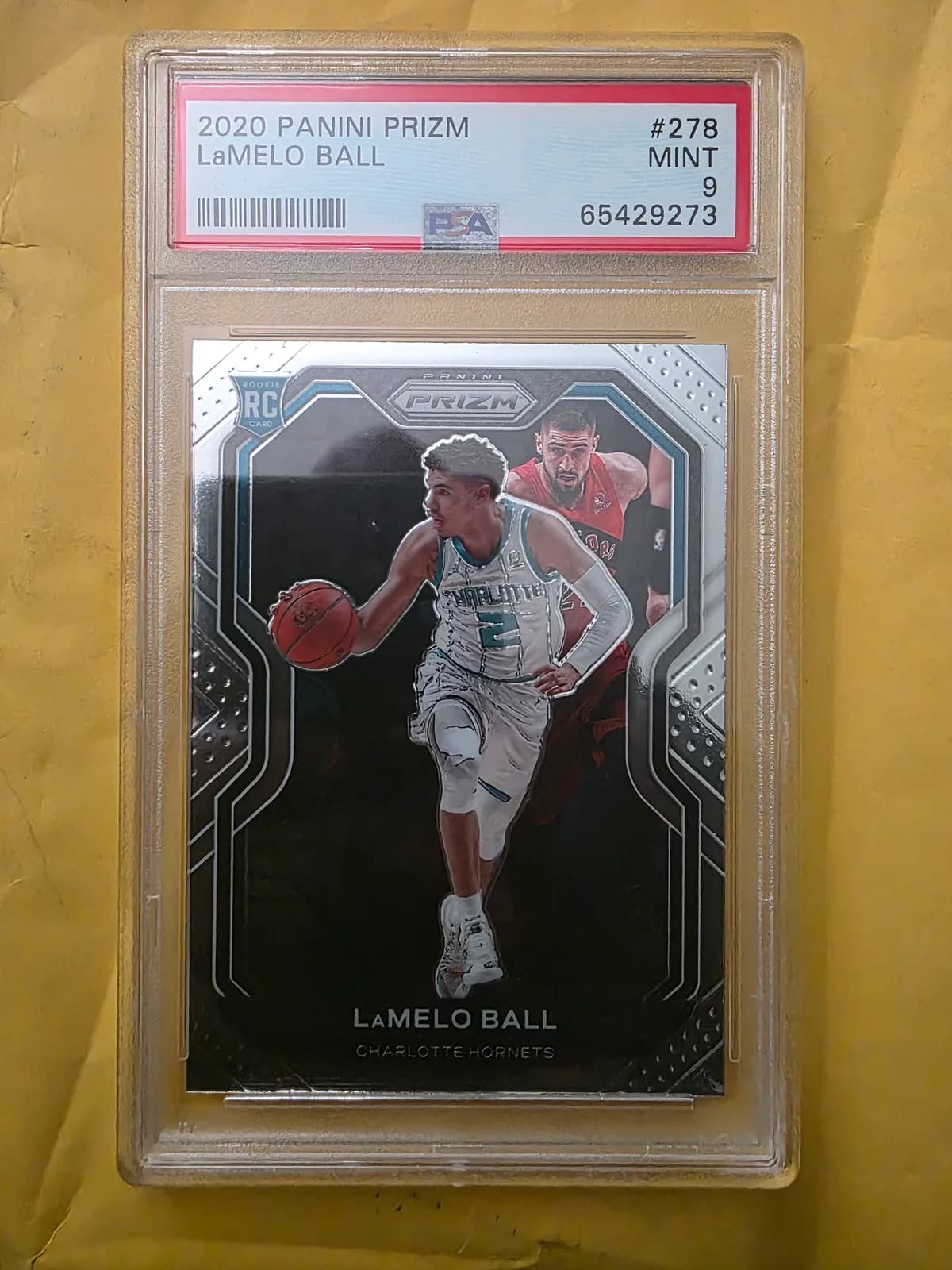
- 2020 Panini Prizm · LaMelo Ball · No. 278
- Grade on the slab
- PSA 9 · owner-declared
- Confidence
- 80 / 100
03 · Confirm
An expert confirms it.
If a grading company already graded your item, we ask that company directly whether its certificate is real. If it says yes, your record is marked Independently authenticated in gold, with the company’s name on it. If the certificate covers a report rather than the item itself, the record says exactly that. There is no other way to get gold — not even by paying.
04 · Save
It is saved for good.
A fingerprint of your record — proof that it exists, and each time it changes hands — is saved on Polygon, a public blockchain: a shared notebook that nobody, including us, can quietly erase or rewrite. Your name, email and photos are not on it.
polygon:0x3f…a1c4 · saved
05 · Yours
It is yours.
The finished record is yours: a certificate, a public page anyone can open without an account, and the fingerprint on the blockchain. Keep it for insurance or for the item’s history, and hand it to the next owner when you sell.
You also get two things to hold: the Certificate of Permanence, the formal document, and the receipt, a small card with a QR code to print, share or hand to a buyer. Scanning it opens the live record.
You started this page with a receipt in a drawer. You end with one that can’t be lost — and a certificate behind it that anyone can check. Keep your receipts.
Certificate of Record
LaMelo Ball · Prizm No. 278
No. 00000482
The receipt travels with the item: send someone the link and they can check the record themselves, no account needed.
What’s a Tag?
A Tag is your item’s record. It says what the item is, what shape it is in, who owns it, and sometimes roughly what similar items have sold for. It also shows a score for how strong your photos and details are.
On its own, a Tag says one thing: you own this item, on this date, in this condition. Boss Tag is not a grader, and our software’s opinion is never a verdict. A record says “independently authenticated” only when an outside expert — the company that graded the item — confirms it, and the record names them. Hands-on expert checks and appraisals are coming; you do not need either to keep a Tag.
When you sell or give the item away, you hand the Tag to the new owner from your dashboard. They get the record and everything on it, and it shows them as the new owner.
What you can record
Anything you can photograph. These are the main kinds. Each record only says what the evidence supports, and never more.
Coins & Banknotes
Type in the PCGS certificate number. We confirm it with PCGS, and when they do, your record turns gold and names them. A coin without a certificate still gets a record — it just stays plain.
Start with a PCGS numberSigned Items & Gifts
Keep the moment it was signed or given: a short video from the signer's or giver's own phone, saved on the item's record. The video shows what happened; it is not proof that a signature is real.
See recorded momentsCards & Collectibles
Set, year, player and condition from your photos. A slab's details go on the record either way; it turns gold only when the grading company confirms the slab.
Record a card or comicJewelry & Watches
Make, model, reference number and materials. If a gemstone has a GIA report, we confirm the report with GIA, and the record says exactly what the report covers — the report, not the whole piece.
Record a watch or pieceSneakers & Fashion
Model, release and size, plus what similar pairs sell for. Whether a pair is genuine is a call for a human expert, so a basic record never claims it for you.
Record a pairCars
VIN, mileage and condition, plus a price guide from similar sales. It is a guide, not a professional appraisal or inspection.
Record a vehicleHomes & Land
Parcel details, public records and an automatic estimate, for your own records. Boss Tag does not represent buyers or sellers and takes no commission.
Record a propertyCommon questions
Do I have to sell anything to use Boss Tag?
No. Most people make records for their own files, for insurance, or to have the item’s history ready for later. The record is yours to keep.
What exactly do I get?
A certificate that says what your item is, a public page anyone can open without an account, and a fingerprint on a public blockchain so the history cannot be quietly changed. Your first one is free, and it moves to the next owner with the item.
Why is my record not gold?
Gold only appears when the company that graded your item confirms it — today that means PCGS for coins and banknotes, and GIA for gemstone reports. If your item has no grading certificate, or its grader is one we cannot check yet, the record stays plain and says what it is based on: what you told us, and what our software saw in your photos. Nobody can pay to make a record gold.
What do the labels on a record mean?
Owner-declared means you told us, and our software looked at your photos. If your certificate can be looked up on the grader’s own website, the record links you there without claiming anything itself. Independently authenticated, in gold, means an outside expert confirmed it, and the record names them.
What if I sell the item somewhere else?
Hand the record to the new owner from your dashboard, or mark the item as sold. The new owner needs a free Boss Tag account. Your history stays with you.
Is my personal information on a blockchain?
No. Only a fingerprint of the record — proof that it exists, and each time it changes hands — is saved on Polygon, a public blockchain. Your name, email and photos stay with Boss Tag, not on the blockchain.
What does a recorded signing prove?
That the signing happened, and when: the signer records a short video on their own phone through a one-time link, and it is saved to the item’s record. It does not prove a signature is genuine. Only a company that checks signatures can do that, and the record would name them.
What's the difference between the receipt and the certificate?
They are two faces of one record. The Certificate of Permanence is the formal document. The receipt is a small card with a QR code that you can print or share; scanning it opens the live record.
What does a signature on a receipt mean?
An optional, planned feature — not available yet. When it ships, a signature on a receipt will show that a signing was witnessed and recorded — not that the autograph is real. It never means Boss Tag authenticated the signature itself. Only the company that checks signatures can confirm that, and that confirmation — and only that — earns the gold standing. A record without a signature simply shows none.
Can I record something I don’t own?
No. A record is a claim that you own the item, so only the owner can make one.
Is my first record really free?
Yes — the whole thing, not a trial: the certificate, the public page and the blockchain fingerprint. One free record per person, on a verified account. After that, each record is $14.99, or included in a subscription. Expert confirmation is always an optional extra.
What if a paid expert check can’t be finished?
You get your money back automatically, in full, with an email saying so. Once the expert gives an answer, either way, the check is done. If no answer can be reached, your next try is free.
Ready to start?
Five minutes, your phone, and the item in front of you. That’s the whole first step.
Anyone can check a record, without an account. Look at one before you start.